Is Now a Good Time to Refinance? 2026 Analysis
Is now a good time to refinance? It depends less on today’s mortgage rate than on three factors specific to your loan: how much your current rate exceeds today’s market, when you’ll break even on closing costs, and how long you plan to stay in the home.
This analysis covers where mortgage rates stand right now, who should consider refinancing in 2026, who should wait, and how to know when your specific window opens.
Last updated: September 2026
Where Mortgage Rates Stand Right Now
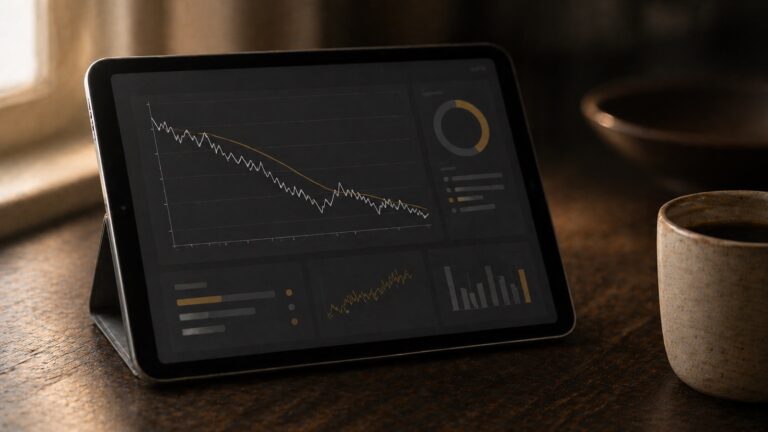
Mortgage rates ticked up slightly to start September, with the 30-year fixed averaging 6.71% — up from 6.66% the week before, according to Freddie Mac’s Primary Mortgage Market Survey (week of September 3, 2026). The 15-year fixed averaged 6.04% over the same period. But a single rate figure means little without context. The 30-year fixed rate, as tracked by Freddie Mac’s PMMS, gives the most reliable weekly benchmark for where the market actually is — not where lenders advertise.
Rates have moved in a narrow band for much of 2026, drifting up and down by a quarter point or so from month to month rather than trending sharply in either direction. That kind of range-bound market means is now a good time to refinance is a question worth revisiting every few weeks, not answering once and forgetting — which is exactly what Rate Watch is built to do.
What matters more than today’s rate is the gap between today’s rate and your current mortgage rate. A homeowner at 7.5% looking at today’s market rate of 6.71% (Freddie Mac PMMS, September 2026) sees a meaningful refinance opportunity — a gap of nearly three-quarters of a point. A homeowner already at 5.5% sees nothing worth acting on, regardless of what the headline says.
Rate Watch monitors this gap continuously. Instead of guessing whether the market has moved enough, you’ll know when conditions shift in your favor for your specific loan.
Rate data sourced from Freddie Mac PMMS — updated weekly.
Who Should Consider Refinancing in 2026
Three groups of homeowners are in the strongest position to benefit from refinancing right now:
1. Homeowners whose current rate is at least 0.75% above today’s market rate.
The traditional rule of thumb has been a 1% rate drop, but with closing costs varying significantly by lender, a 0.75% gap can pencil out depending on your loan balance and break-even tolerance. The larger the gap, the faster the math works in your favor.
2. Homeowners with adjustable-rate mortgages approaching their reset.
If your ARM is within 12 to 24 months of its first reset, refinancing into a fixed-rate loan locks in predictability. Even at a slightly higher rate than your current introductory rate, the long-term protection from rate volatility often justifies the move.
3. Homeowners with PMI who have built meaningful equity.
If you took out your loan with less than 20% down and your home has appreciated, refinancing can eliminate private mortgage insurance entirely. The PMI savings alone can justify the closing costs even if rates haven’t moved much.
Who Should Wait
Refinancing isn’t free. For these homeowners, waiting is usually the smarter call:
Homeowners planning to move within 2 years.
If you’ll sell before reaching your break-even point, you’ll lose money on the refinance regardless of how much rates dropped. Closing costs can run between 2% and 5% of the loan amount, and recovering that through monthly savings takes time you may not have. (See: Is Refinancing Worth It If You’re Moving in 2 Years?)
Homeowners whose rate is within 0.5% of today’s market.
The math rarely works on a small rate gap once closing costs are factored in. Wait for a more meaningful market move before acting.
Homeowners with credit scores below where they were at origination.
If your credit profile has weakened since you took out the loan, the rate you’d qualify for today may not be lower than your existing rate — even in a falling rate environment. For these homeowners, asking ‘is now a good time to refinance’ is the wrong question — the question is when.
Note: This analysis is for informational purposes only and does not constitute financial advice. Your specific situation may differ — consult a licensed mortgage professional before making refinancing decisions.
How to Calculate Your Break-Even Point
Your break-even point is the month when your refinance savings exceed your closing costs. The math is straightforward:
Closing costs ÷ monthly payment savings = months to break even
A homeowner with $5,000 in closing costs saving $200 per month after refinancing would break even at month 25 — just over two years. After that point, every dollar of monthly savings is real money in their pocket.
If you’ll stay in the home longer than your break-even point, refinancing pays off. If you’ll move sooner, it doesn’t. Understanding this number for your specific loan is the single most important step in the decision.

A Worked Example: Two Homeowners, Two Different Answers
Here’s how the math plays out for two hypothetical homeowners with the same loan balance but different situations.
Homeowner A has a $350,000 balance at 7.4%. Refinancing to today’s 6.71% rate lowers her payment by roughly $170 a month. Her closing costs run $4,800. Dividing $4,800 by $170 puts her break-even point at 28 months — a little over two years. She plans to stay in the home for at least seven more years, so the refinance clears her break-even point with years of savings to spare.
Homeowner B has the same $350,000 balance at 6.9% — a smaller gap. Refinancing saves him about $55 a month, and his closing costs are similar at $4,600. That puts his break-even point at roughly 84 months, or seven years. He’s planning to relocate for work within three years. For him, the math doesn’t work — the savings never catch up to the cost before he’d sell.
Same rate environment, same loan balance, opposite answers. That’s why “is now a good time to refinance” is never a single yes-or-no — it’s a calculation specific to your loan, your costs, and your timeline.
The Three Questions to Ask Before Refinancing
Before signing any refinance paperwork, every homeowner should be able to answer:
1. What is the gap between my current rate and today’s market rate?
Round numbers don’t help here. The exact figure determines whether the math works.
2. What is my break-even point in months?
A specific number — not a vague sense of “it’ll pay off eventually.” The math should be clear before you commit.
3. How long do I plan to stay in this home?
If the answer is shorter than your break-even point, the refinance loses you money even if rates dropped 2%. Honest answers here save real dollars.
If you’d rather not run this math by hand, our refinance calculator walks through this exact math against your specific loan and shows your break-even point in seconds — no credit pull required.
Other Reasons Homeowners Refinance
A lower rate isn’t the only reason to refinance — though it’s the one that gets the most attention when people ask is now a good time to refinance. A few other scenarios are worth knowing about, even if they’re not the focus of this analysis.
Shortening your loan term. Some homeowners refinance from a 30-year to a 15-year mortgage — not to lower their monthly payment, but to pay off the home faster and reduce total interest paid over the life of the loan. This usually means a higher monthly payment in exchange for a shorter payoff timeline, so it’s worth running the numbers against your budget before committing.
Cash-out refinancing. A cash-out refinance replaces your mortgage with a larger one and pays you the difference in cash — often used for home improvements or consolidating higher-interest debt. Cash-out refinances typically carry a slightly higher rate than a standard rate-and-term refinance, and turning short-term debt into 30 years of mortgage interest isn’t always the cheaper option once you run the full math.
Removing a co-borrower. Divorce, inheritance, and other life changes sometimes require refinancing to remove a name from the loan. This is one of the few refinance decisions that isn’t primarily about rate — it’s about who’s legally responsible for the loan going forward.
Whatever the reason, the same break-even logic applies: know your costs, know your timeline, and know the number before you sign.
How to Know When Your Window Opens
Mortgage rates move constantly. Most homeowners have no practical way to track whether the market has shifted enough to make refinancing worth it for their specific loan — without checking rate dashboards every morning.
That’s the gap LoanRefinancers Rate Watch closes. Rate Watch monitors mortgage rate trends continuously, sourced from Freddie Mac PMMS, and alerts you when conditions shift meaningfully relative to your current rate. No daily checking. No spreadsheets. No guessing.
You’ll get notified when the market moves enough to be worth a closer look — and you’ll have the context to decide whether to act or wait.
When the Math Doesn’t Work, Wait
The honest answer for many homeowners is that now is not a good time to refinance. That’s not a failure of the market — it’s a function of the math. If your rate gap is small, your break-even point is years away, or you’re planning to move soon, waiting is the right call.
Rate Watch keeps you informed even when the answer is “not yet.” When the market shifts enough to change your math, you’ll know.
Frequently Asked Questions
How much do mortgage rates need to drop before refinancing makes sense?
The traditional rule is a 1% rate drop, but a 0.75% drop can work depending on your loan balance and closing costs. The right answer depends on your break-even point — not a universal rule.
How long does the refinance process take?
Most refinances close within 30 to 45 days from application. Government-backed streamline refinances (FHA, VA) can sometimes close faster.
Will refinancing hurt my credit score?
Refinancing involves a hard credit inquiry, which can temporarily lower your score by a few points. Most scoring models treat multiple mortgage inquiries within 14 to 45 days as a single inquiry, so shopping rates with several lenders in a short window minimizes the impact.
Can I refinance if my home value has dropped?
Possibly. Some government-backed programs (FHA Streamline, VA IRRRL, HARP successors) allow refinancing even when the loan-to-value ratio is high. Conventional lenders typically require at least some equity, often 3% to 5% minimum.
What’s the difference between refinancing and a cash-out refinance?
A standard refinance replaces your existing mortgage with a new one, typically at a different rate or term. A cash-out refinance replaces it with a larger loan, with the difference paid out as cash. Cash-out refinances generally carry slightly higher rates and stricter qualification.
Should I refinance from a 30-year to a 15-year mortgage?
It depends on your budget and goals. A 15-year term typically carries a lower rate than a 30-year, but the monthly payment is meaningfully higher because you’re paying off the balance twice as fast. It makes the most sense for homeowners who can comfortably absorb the higher payment and want to minimize total interest paid — not as a way to lower monthly costs.
Is it worth refinancing to save $100 a month?
It can be. Whether is now a good time to refinance for a modest monthly savings depends entirely on your break-even point. If $4,000 in closing costs takes 40 months to recoup at $100 a month in savings, the refinance only pays off if you’ll stay in the home longer than that. A smaller monthly savings isn’t automatically not worth it — run the break-even math before deciding either way.
The Bottom Line
Whether is now a good time to refinance depends entirely on your specific loan — your rate, your closing costs, your timeline. A meaningful rate gap, a break-even point you’ll actually reach, and a plan to stay in the home long enough are the three signals that tell you the math works.
If you’re not sure where you stand, start with Rate Watch. It monitors the market on your behalf and alerts you when conditions shift enough to be worth reviewing. No credit pull. No SSN. No pressure.